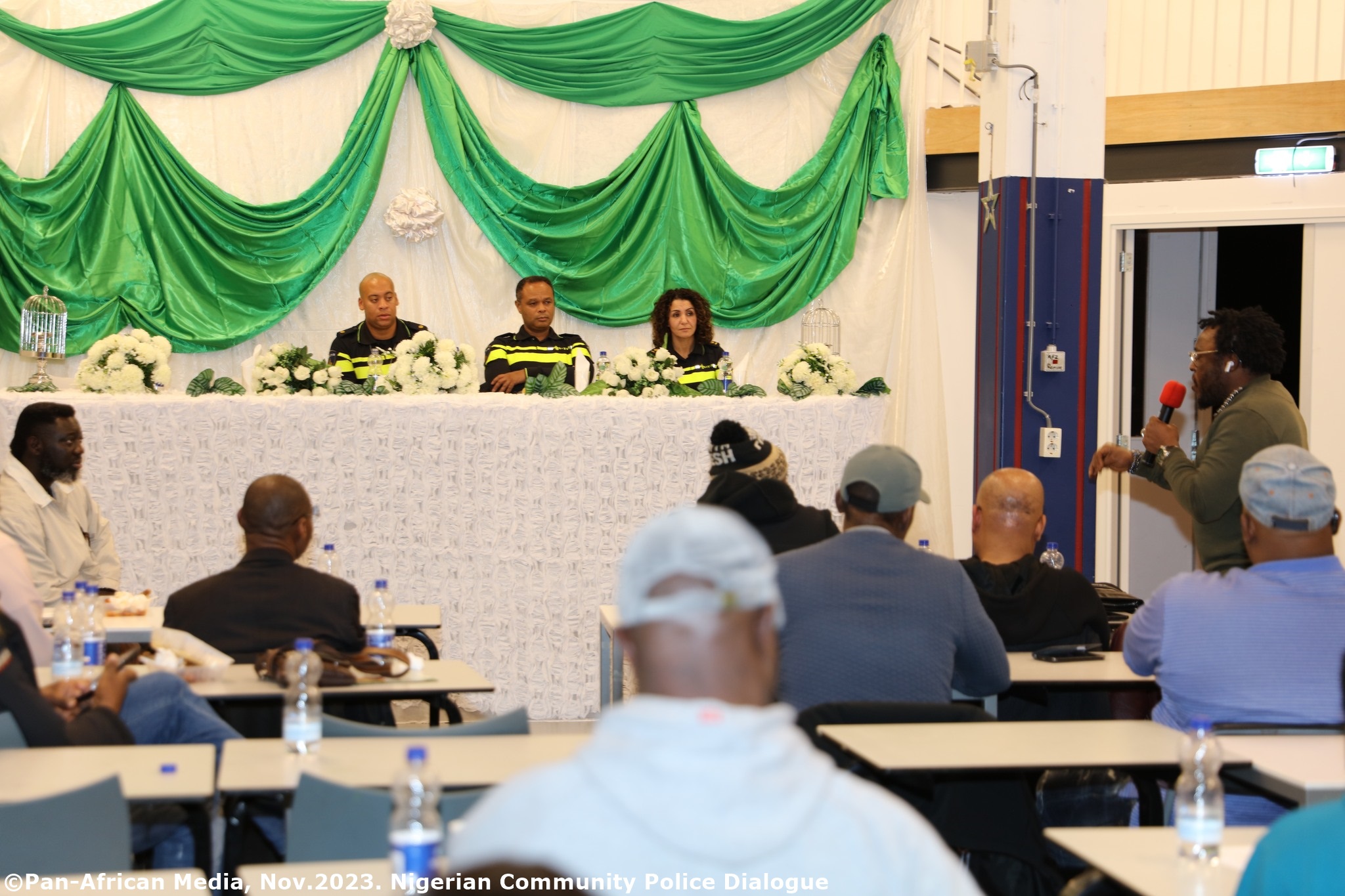
Nigerian Community Police Dialogue -Nov. 2023
Key Highlights Attendance: 50–60 participants, including Nigerian community leaders from various ethnic groups and three police representatives (Fatima Tougha, Marten Bouma, Gregory van Geene). Notably absent were representatives from the municipality, especially Chairlady Tanja Jadnanansing. Theme: Issues affecting undocumented migrants, including the lack of general amnesty and harsh subletting evictions. Closures of Nigerian-owned businesses (EetCafe and Unic Multiservices), with concerns over fairness and lack of municipal support. Community Frustrations: Absence of Immigration and Naturalisation Service (IND) left key immigration questions unanswered. No municipal representative to address business closure grievances. Perceived lack of preparation and accountability from police and municipal authorities. Outcomes & Recommendations The event revealed a growing community expectation for more responsive and inclusive engagement. Future dialogues must include IND representatives and municipal officials to address immigration and business concerns effectively. Improved communication and delivery on commitments are crucial to maintaining trust and participation.
Nigerian Community Police Dialogue
Brief Evaluation Report
Date: Friday, 3 November 2023
Venue: Kazerne Reigersbos
Introduction
The Nigerian Community Police Dialogue held on Friday, 3 November 2023 was a follow-up to the maiden event held in April 2023.
This was a much-anticipated event within the Nigerian community, since the maiden event had partly been treated as a “wait and see” event by a section of the wider Nigerian community.
Attendance
The event was attended by notable Nigerian community elders, chiefs and title holders from the Igbo, Edo and Yoruba communities, among others.
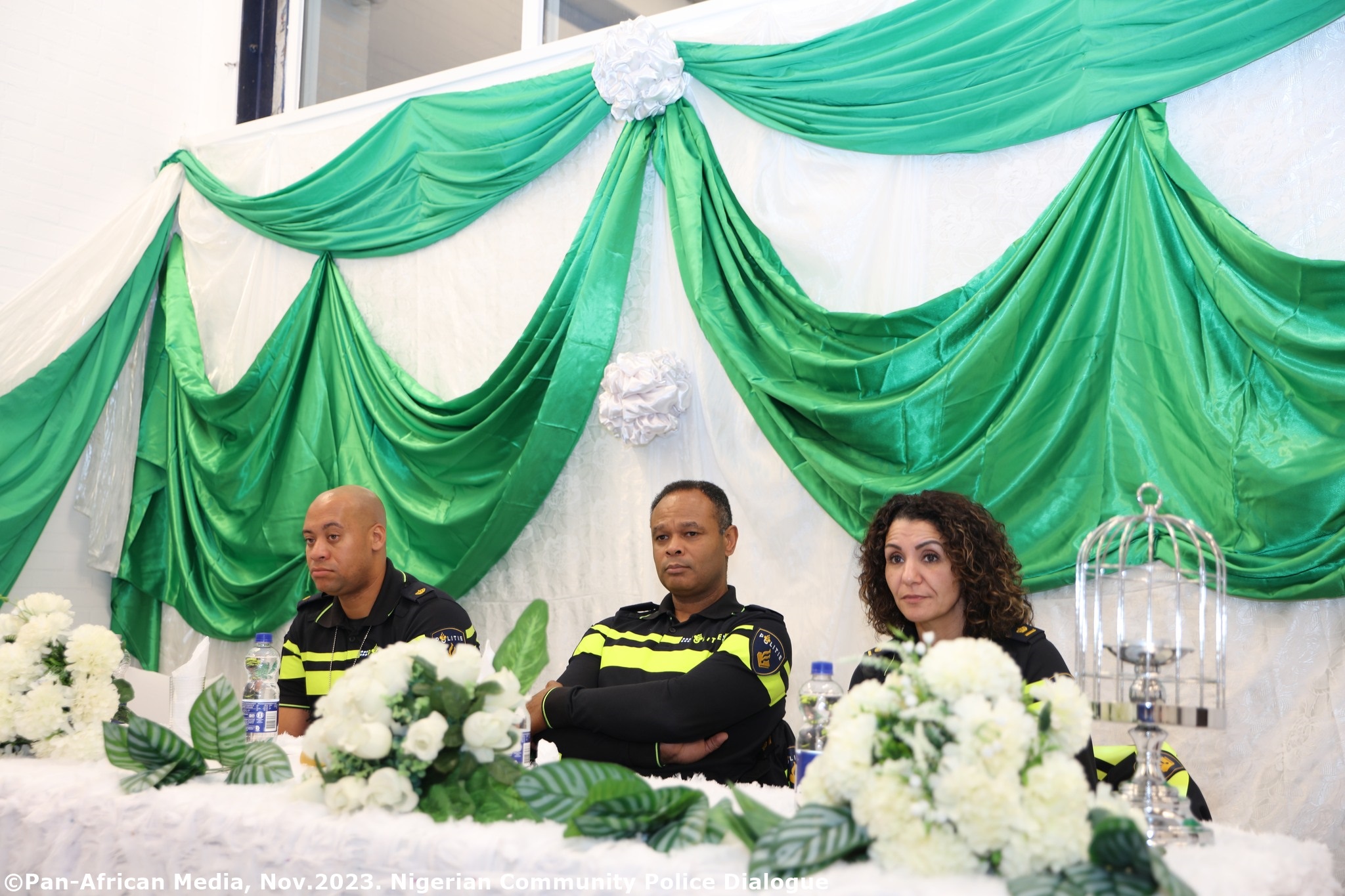
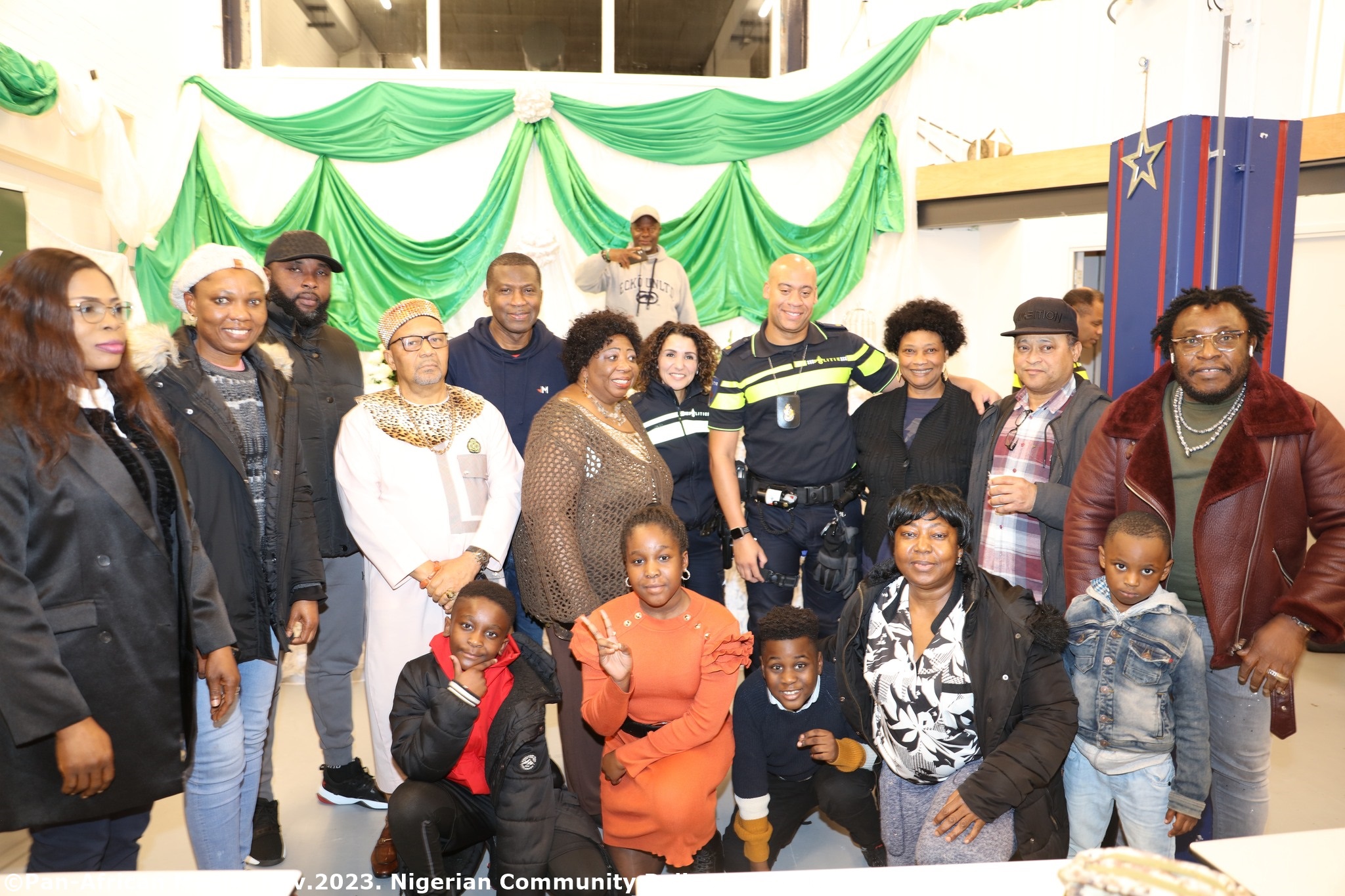
The Police were represented by Fatima Tougha, Marten Bouma and Gregory van Geene. The Chair of Amsterdam Southeast district, Tanja Jadnanansing, and other officials from the Amsterdam municipality were unavoidably absent, despite an earlier assurance that she would attend.
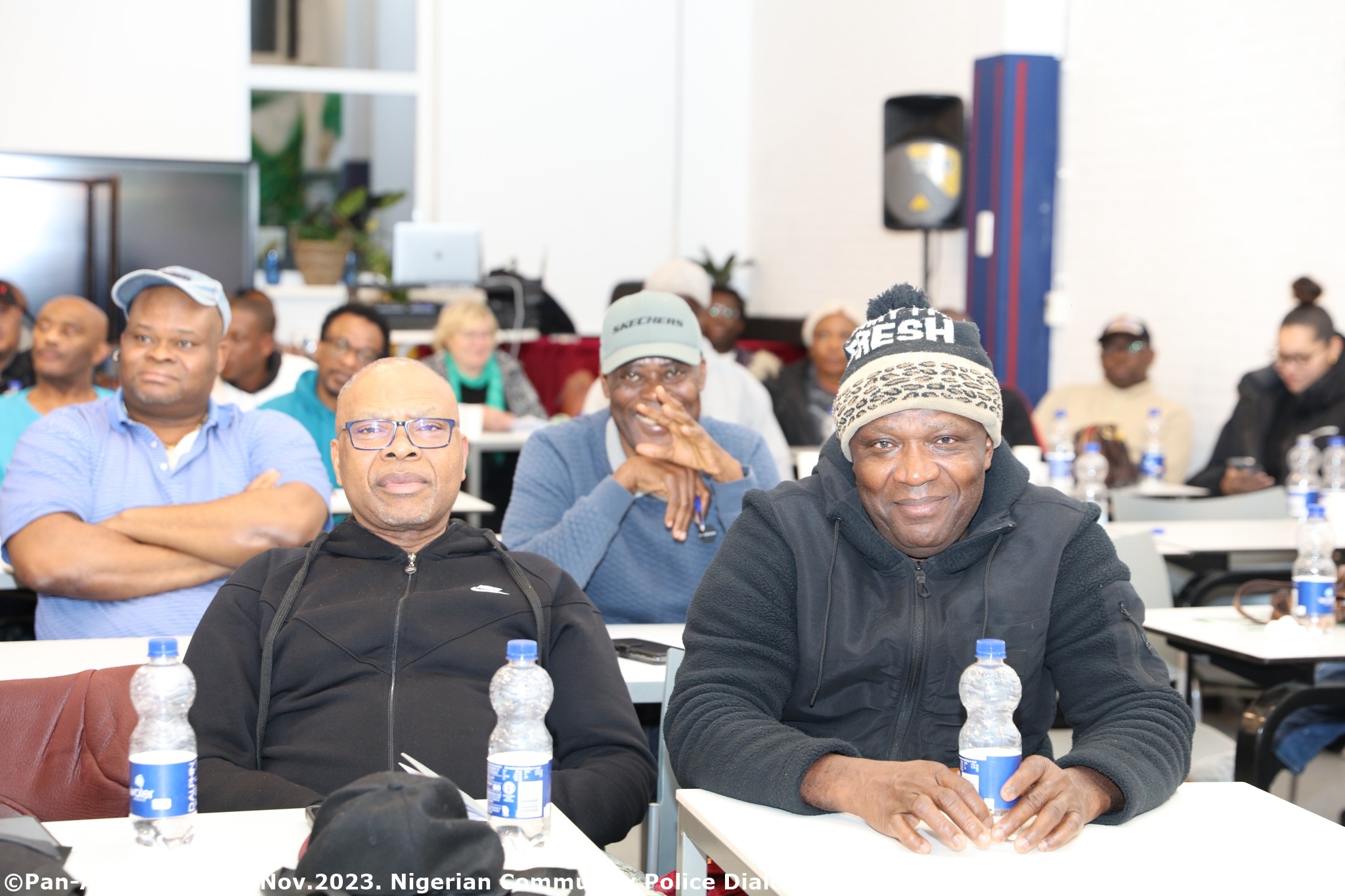
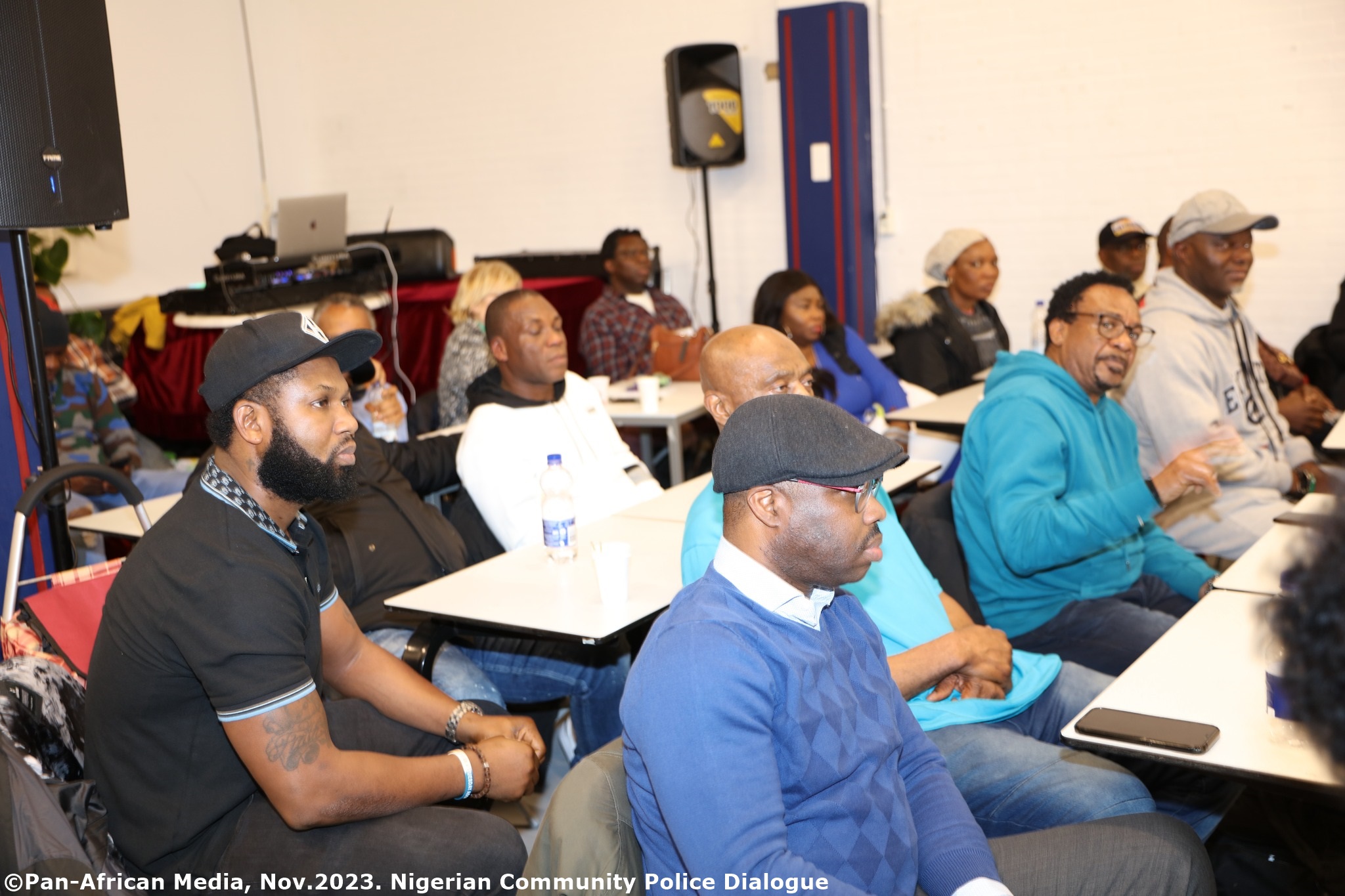
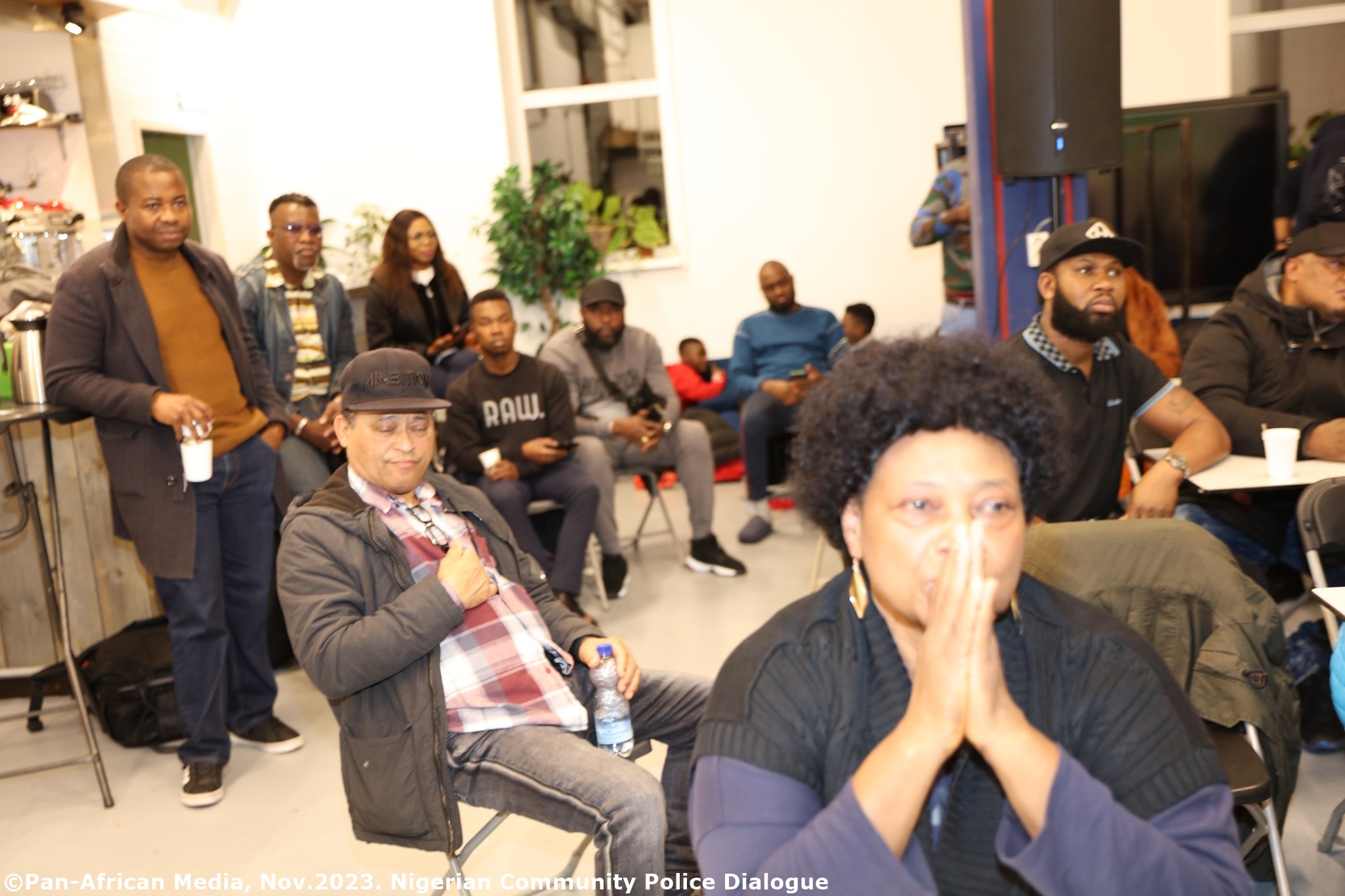
Attendance was estimated at between 50 and 60 people. Several people attended for the first time, suggesting that awareness of the dialogue was beginning to grow within the target group.
Unlike the previous event, only one pre-dialogue consultation was held with Nigerian community leaders. Its aim was to gain their support and endorsement for the main dialogue. In hindsight, the meeting appears to have had little or no effect on actual attendance.
The Nigerian community is gradually accepting that dialogue with the Police and the municipality has come to stay.
Theme
The agreed theme had two parts:
- Issues affecting undocumented residents.
- Challenges faced by Nigerian entrepreneurs in Amsterdam Southeast.
These topics generated considerable interest because related issues were already affecting the community. Participants therefore expected that the dialogue would provide answers and possible solutions.
Publicity
The event was publicised mainly through WhatsApp messages, Facebook, printed flyers, personal contacts and community networking.
Welcome and Dinner
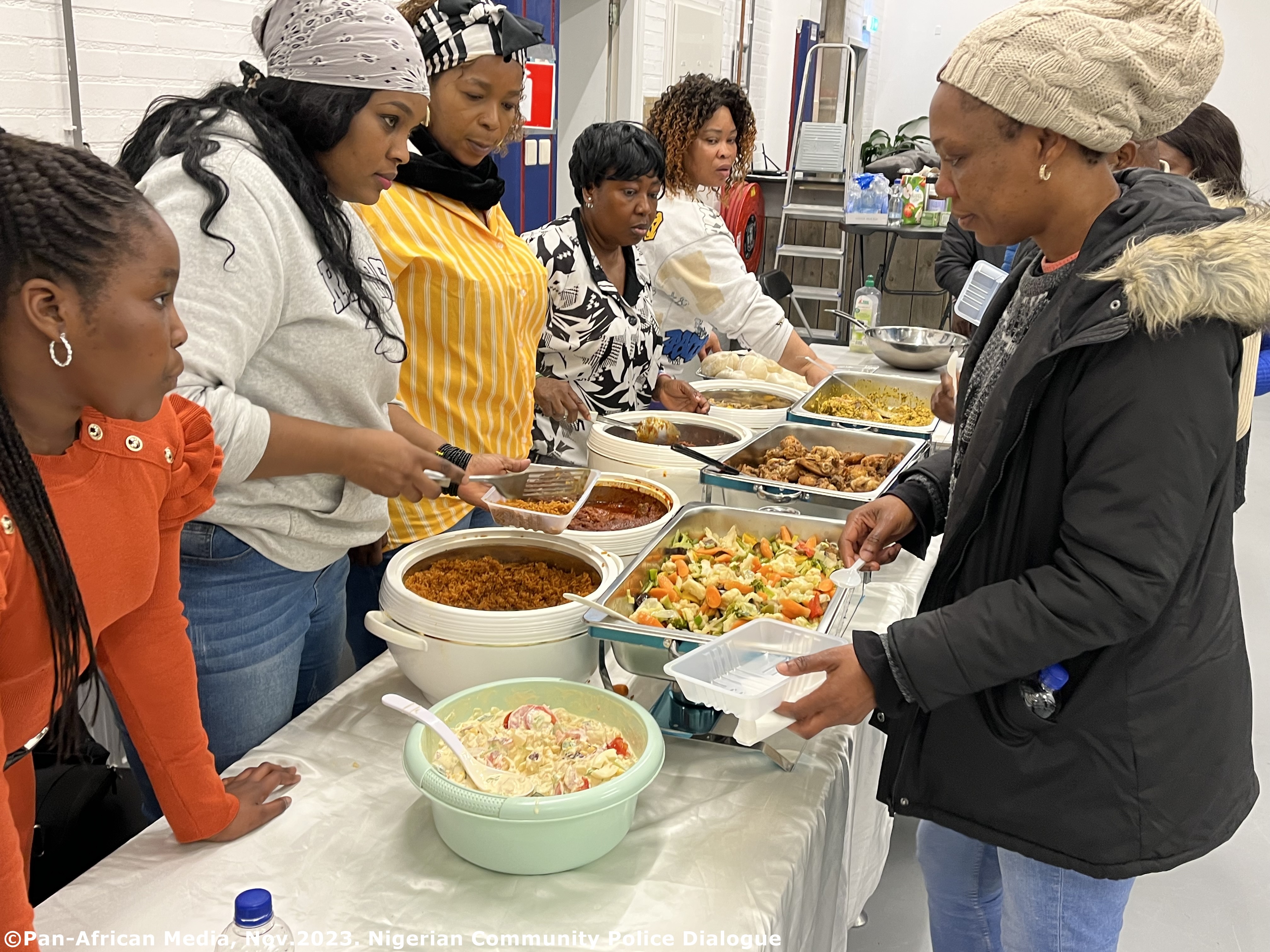
The evening began at 18:00 with a buffet dinner while the DJ played popular Nigerian hip-hop music. The menu included Nigerian jollof rice, fried rice, waakye, and egusi soup with semolina “swallow”.
At about 19:00, the formal session began with the Dutch and Nigerian national anthems. The master of ceremonies, Elder Uyi Olaye, conducted introductions. The hostess, Archbishop HelenRuth Dorkenoo, then welcomed participants and introduced the main issues for discussion.
The remainder of the meeting took the form of questions and answers.
More photographs are available in the event photo gallery. A YouTube video recording is also available.
What Was the Yield of the Event?
The main issues arising from this second dialogue may be summarised as follows:
1. The hostess introduced the principal issues immediately: matters affecting undocumented residents and the recent closure of Nigerian-owned businesses.
2. An early question concerned whether another general immigration pardon would be issued, since the previous one had taken place more than 15 years earlier.
3. Mr van Geene explained that his police division was not responsible for immigration matters. These fall under the jurisdiction of the Immigration and Naturalisation Service (IND), which was not represented at the meeting. Participants immediately requested that an IND official attend the next dialogue to provide accurate information and answer immigration questions. Mr van Geene also indicated that a general pardon could be a political matter and suggested asking political representatives to raise it at government level.
4. The response did not appear to satisfy participants and led to further questions and debate. A sense of disappointment arose because the Police had not brought the relevant specialists needed to answer the evening’s central questions.
5. Several further appeals were made for the IND to be represented at the next dialogue.
6. The other dominant issue concerned the closure of two Nigerian businesses: an EetCafé at Bijlmerplein and Unic Multiservices on Bijlmerdreef. The latter case involved housing corporation Rochdale and had continued through legal proceedings for several years. Rochdale reportedly sought to evict the shop owner, who operated a money-transfer service and sold prepaid telephone cards, arguing that these activities no longer fitted the business zoning for the area. After considerable dispute, Rochdale ultimately evicted the owner. Mr Kenneth Ehigiene stated that he felt unfairly treated, since he had not owed Rochdale money. His requests for intervention from the municipality and district government had not produced support. He was left without a business or income and had not been offered alternative premises, despite operating there for more than 20 years. He had hoped Ms Jadnanansing would explain why he received no support.
7. The Police representatives apologised for Ms Jadnanansing’s last-minute absence. They acknowledged that the case was well known, but stated that the Police were not in a position to provide the necessary answers.
8. A question was also raised about shared accommodation and subletting. Participants asked why, when the Police receive a report, all occupants may be removed and the accommodation taken away, leaving former occupants homeless.
9. The response was that subletting social housing is strictly prohibited by law and can lead to eviction. Mortgaged homes are treated differently because they are privately owned. When the Police accompany an eviction team, they are carrying out an enforcement duty.
10. Because the Police could not give authoritative answers to several of the central questions, the meeting concluded with a vote of thanks by Dr Francis Ogbuli, a Nigerian general practitioner in Amsterdam Southeast.
What Could Be Better or Different Next Time?
The dialogue generated considerable anticipation, but participants were disappointed in two main respects. First, there were no IND officials or other suitably qualified representatives present to answer immigration questions. Second, Ms Jadnanansing’s absence was strongly felt because her input was needed on the closure of Nigerian businesses.
It is of paramount importance that participants’ requests and expectations are respected in order to maintain the momentum of the dialogue. Any departure from what has been expected or promised should be addressed and communicated promptly.
Prepared by:
Pan-African Media & Development Agency
Email: media@radiovoiceofnaija.org
Tel: 0684606550 / 0626046432